Nepal’s majestic mountain ranges are breathtaking, but for the communities who call them home, they also present immense challenges. For generations, villagers have relied on stone and mud to construct homes, but these traditional structures are fragile against the powerful earthquakes that often shake the region. With steep, narrow trails that make transporting cement, steel, or bricks nearly impossible, families are forced to rebuild with the same vulnerable materials—leaving them exposed to the next disaster.
This is where Operation Hope Foundation (OHF) steps in, bringing not just aid, but innovative solutions and a renewed sense of hope.
The Challenge of Inaccessibility
Imagine trying to build a safe home when every bag of cement, every steel rod, and every brick must be carried for miles on someone’s back or by mule. This is the harsh reality for many villages in Nepal’s mountains. The cost and difficulty of transporting conventional construction materials mean communities often have no choice but to use traditional methods that simply cannot withstand seismic shocks.
OHF recognized this challenge and began exploring alternatives that were both accessible and resilient.
OHF’s Revolutionary Solution: The Rice Bag Houses in Nepal
Our answer is simple yet powerful: the rice bag house.
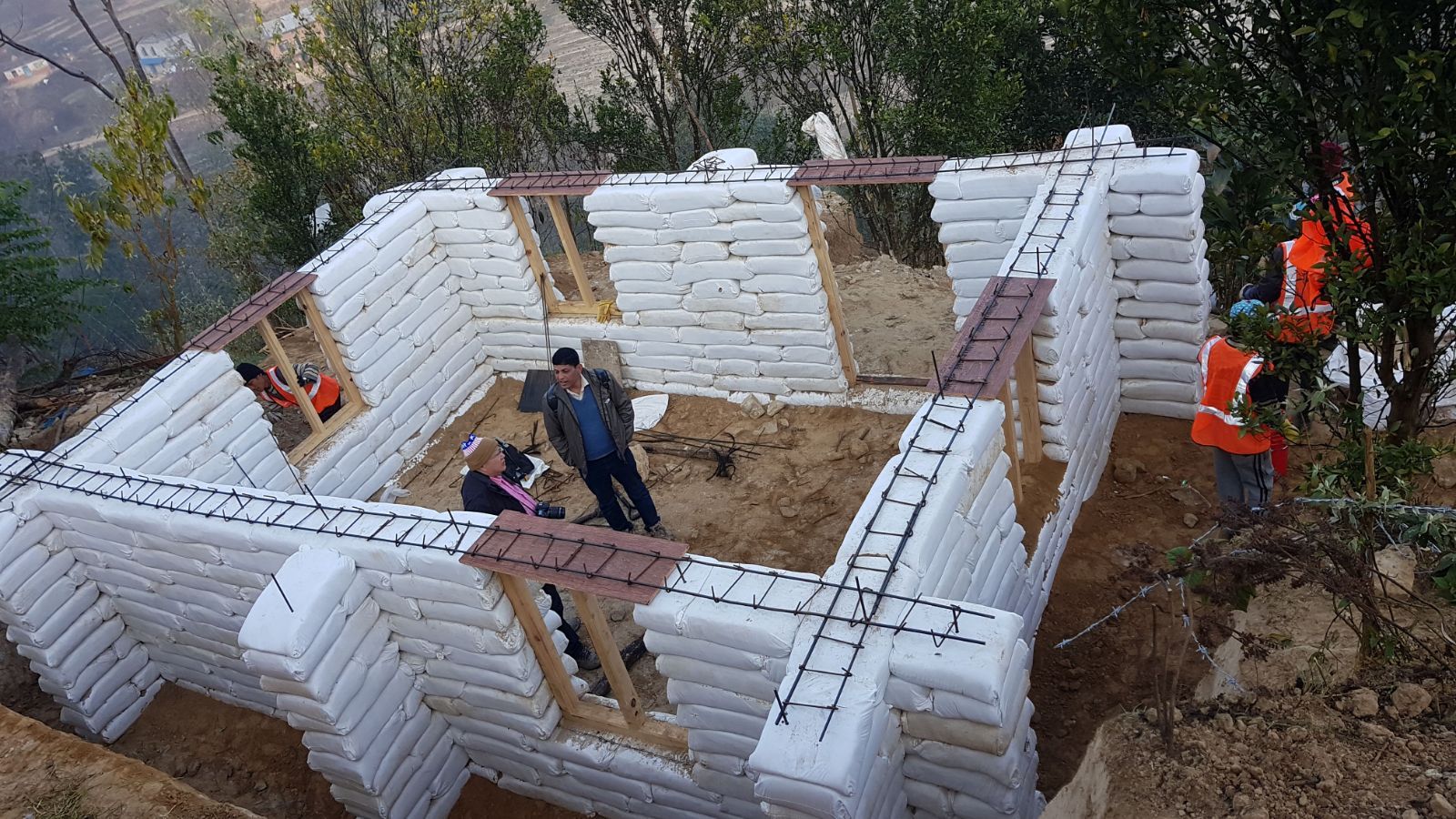
Instead of bricks or cement, villagers fill strong polypropylene sacks—often recycled rice bags—with local soil. These are stacked like bricks, with barbed wire laid between layers for stability. Once plastered on the outside, the walls become incredibly strong, flexible, and resistant to earthquakes.
Why this method works so well in Nepal’s terrain:
Earthquake Resistance: Soil-filled bags absorb seismic shock, performing far better than rigid stone or mud walls.
Thermal Comfort: Thick earthen walls regulate indoor temperatures—cool in summer, warm in winter.
Locally Available Materials: Earth, recycled sacks, and community labor drastically reduce costs and eliminate the need for heavy transport.
Cost Effective: Built without expensive imports, rice bag homes are affordable and sustainable.
This isn’t just theory—it’s proven in practice. Rice bag houses are faster to build, environmentally friendly, and provide lasting safety.
Impact and Empowerment: Over 155 Homes and Counting!
Operation Hope Foundation has already built over 155 rice bag homes in Nepal’s mountainous regions, and the impact has been life-changing. Families now live in safe, sturdy houses that can withstand earthquakes. Beyond homes, OHF has used the same method to construct toilets, classrooms, and community halls—restoring dignity and opportunity to rural villages.
But the true power of this approach lies in empowering communities. Villagers are trained to build these structures themselves, gaining lifelong skills while contributing to their neighbors’ safety. Volunteers also join the effort, creating bonds of trust, friendship, and shared purpose.
And OHF is making sure the knowledge spreads even further:
- A step-by-step instructional video in Nepali explains the building process.
- A detailed online construction manual lists tools, materials, and step-by-step guides.
Building Dignity, Safety, and a Future
These resources mean the rice bag method isn’t just a project—it’s a movement.
The rice bag house project is more than just construction; it’s about building dignity, safety, and self-reliance in vulnerable communities. By transforming simple, readily available materials into earthquake-resistant homes, Operation Hope Foundation is helping to secure a safer future for thousands in Nepal’s mountains.
We invite you to learn more about our work and consider supporting Operation Hope Foundation. Together, we can continue to build hope, one rice bag at a time.